

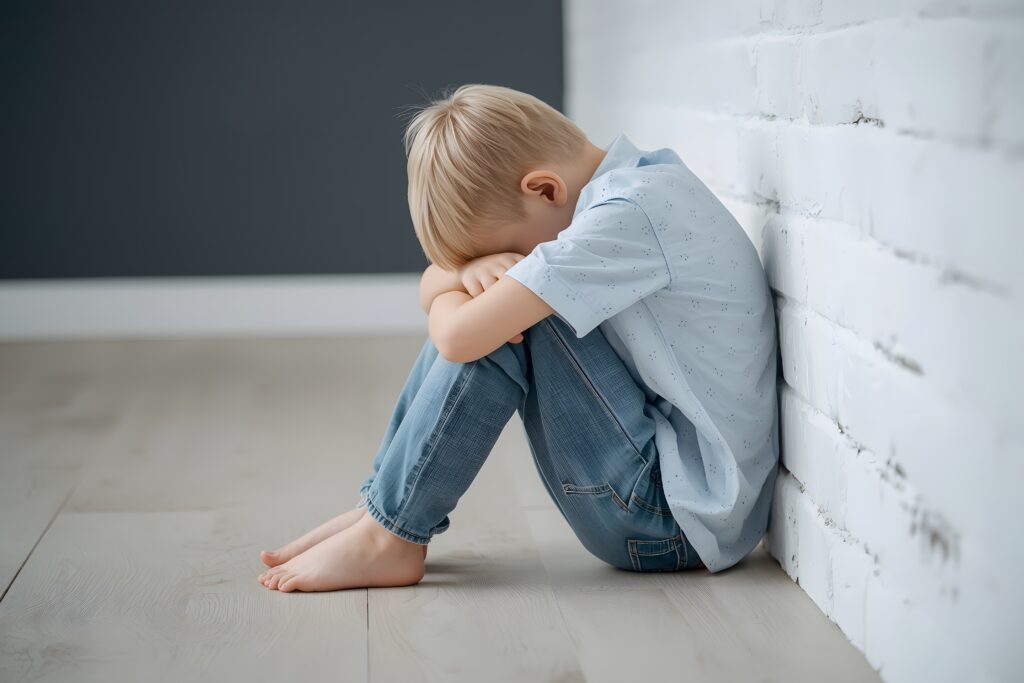
The words we use and the way we respond carry a lot of weight. They can help your child regulate their nervous system, calm their body and move through a tough moment. Our first reactions matter, and paying attention to them is the first step toward showing up in a calmer, more supportive way.
So, I want us to slow down and take an honest look at how we tend to react when a kid is stressed or anxious.
Some automatic responses might be:
-
- “Don’t worry”
- “Trust me, it’s not that big of a deal”
- “Just calm down”
- “This is all in your head”
- “Stop stressing about it”
- “You’re fine”
In attempting to reassure, instead we can end up minimizing or dismissing what the child is experiencing. Let’s be clear, it’s not something we do on purpose. Our intentions are to help.
But think about it. Responses like those above teach them not to trust their own experiences. They teach them to shut down their emotions and tell them that they are overreacting. And ultimately, these responses won’t do anything to actually make any of their anxiety go away.
Regardless of what is causing the anxiety, your child, and more importantly their brain, is interpreting something as a legitimate threat. Is it logical? Perhaps not. But the part of our brain that utilizes logic has nothing to do with the part of our brain that’s hardwired for survival. And survival is the number one priority.
Let’s look at some examples. Turning a library book in late isn’t a threat to safety. Might there be consequences? Sure. But they are likely to be small and come with a tangible finish line. They aren’t going to be linked to survival.
Yet, we might feel sick to our stomachs when tasked with returning it. Our heart might start pounding, we might feel shaky, and it can get hard to think and speak clearly. Our brain is reacting to what feels like an unsafe situation. Those reactions are what feel like anxiety, fear, anger and many more complex emotions.
Similarly, a pop quiz likely won’t tank your teen’s grade (at least not permanently). It won’t make them fail the class, that won’t lead to them being unable to graduate, which won’t mean they’ll never accomplish their goals in life. But our brain has picked up on the discomfort, it’s rang the warning bell, and it full force goes into protector mode. Rumination, emotional distress, and physical symptoms of anxiety then become all consuming. This can happen to adults too! Especially if you have experienced something traumatic in your past.