

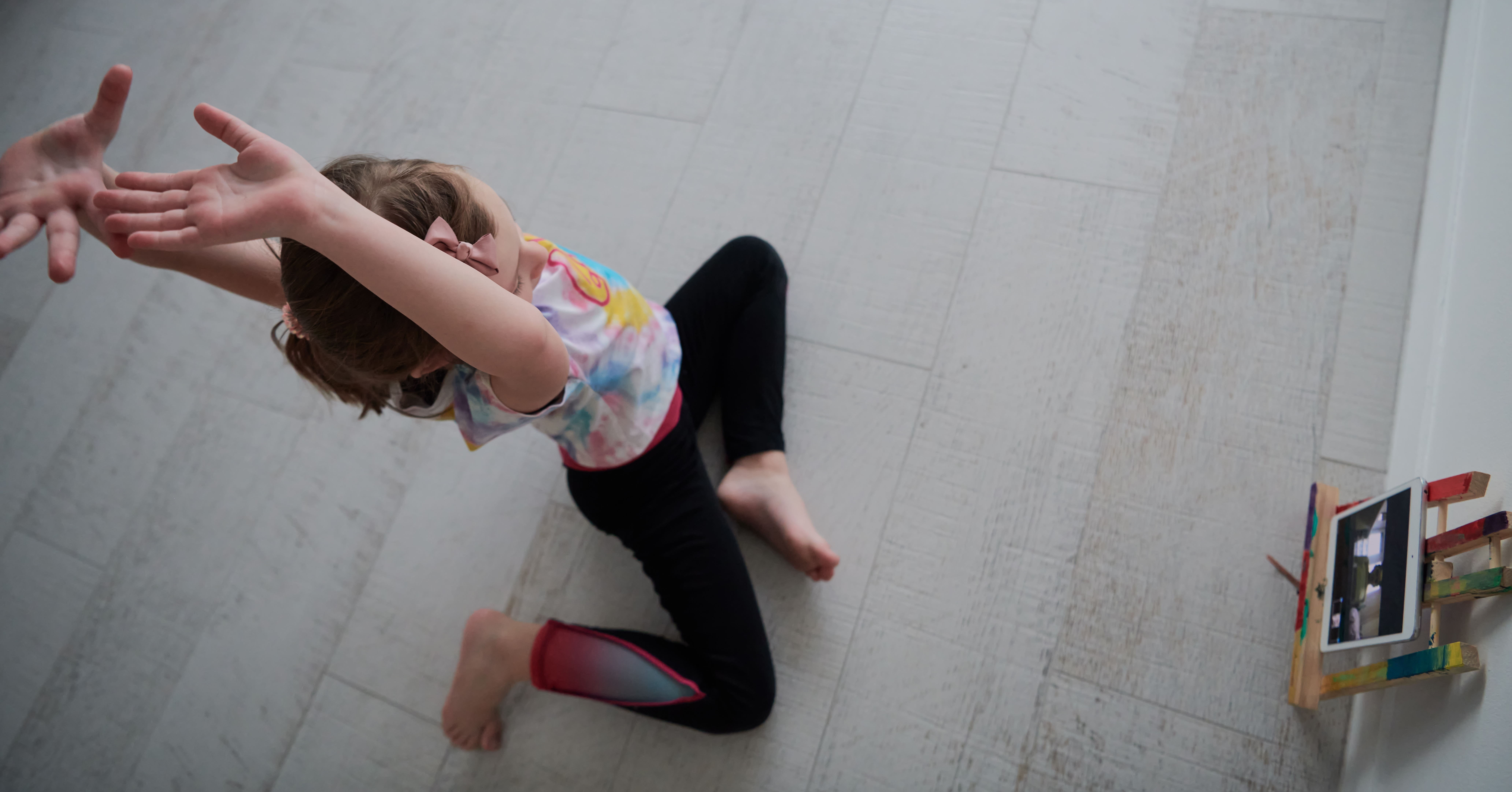
Howdy there! I’m Lea — thanks for coming to learn about dance and movement therapy sessions with me! This five-minute read will give you a glimpse into dance and movement therapy: what it is, which diagnoses benefit, and a peek into the session.
My therapeutic approach is for kiddos and parents that are interested in trying a different kind of therapy with a highly attuned, insightful, and extensively trained pediatric mental health professional.
What Is Dance and Movement Therapy?
Dance and movement therapy is a psychotherapeutic approach within the Creative Arts Therapies. My practice of dance therapy intertwines:
- Movement (structured & creative)
- Play
- Mindfulness
- Body awareness (internal & external)
- Relaxation techniques
- Stillness
- Breath work
- Sensory preference
- Attunement
These elements are woven together to support all aspects of the growing person — physical, mental, emotional, cognitive, and spiritual. My driving purpose as a dance and movement therapist is to co-create an environment and relationship experience that allows the client to build trust, with me and themself.
Who Benefits From Dance and Movement Therapy?
Everyone can! Humans of any age, any developmental ability, any gender expression, any background, any life experience, and any diagnosis can benefit from dance and movement therapy sessions.
The folks I support here at Austin Family Counseling (this list is not exhaustive) include those who:
- Navigate emotional regulation, anger management, conflict resolution, identity formation, peer & family dynamics, anxiety, and depression
- Expand the neurodiversity spectrum — from autism and ADHD to dyslexia and dysgraphia
- Dance under the LGBTQIA+ rainbow umbrella in every gender identity & expression (transgender, nonbinary, queer, gender expansive)
- Range in age from Pre-K through the teen years
What Does a Dance and Movement Therapy Session Look Like?
Since my goal as a dance and movement therapist is to strengthen the relationship, build rapport, and bolster trust with my client(s), a therapy session looks like many different things depending on what the client needs at the moment. I take into consideration the energy level of the day, the kiddo’s (or guardian’s) stated goals, the environment, and the client’s current emotional state.
Below, you’ll see a very small snippet of what could go on in session.
A Preschooler Practicing Impulse Control
For a preschooler working through impulse control (for example, hitting or running away) and identifying emotions, the session could look like a game of Dance, Freeze, Melt — a movement game that supports practicing impulse control. This spinoff on Freeze Dance uses a combination of songs that range in tempo from very fast, to medium, to extremely slow. When the music stops, the bodies in the room freeze! — then melt to the ground.
The benefit: The physiological state shifting (moving the body from very fast, to freeze, to slowly melting) helps strengthen the neural pathways that support physical impulse control. The dance therapist narrates their own bodily and emotional reactions — “My heart is beating so fast! That’s a way my body tells me I’m feeling so excited!” — to model emotion identification.
An Elementary Student With ADHD
For an elementary-aged student with ADHD navigating emotional regulation and anger management at school, a session may look like practicing body awareness while talking about the classes at school that are the most uplifting and which ones are the most challenging. As a dance and movement therapist centering the body and nervous system, I facilitate this intervention by guiding the kiddo to observe different areas of their body as we review the list of classes. The work together grows to support the client to express how they feel, think about, and experience that class by making art, vocalizations, or a movement/gesture that I then mirror back — and we work together to create meaning.
The benefit: By guiding the client to tune into their bodily reactions, the learner strengthens their ability to listen to their body, expands their understanding of themselves, and deepens their insight into the way their emotions physically feel. Once they have this knowledge, the hope is they learn to label the emotion as a feeling, express that feeling to their adults for support & understanding, and implement a coping strategy.
A Teenager Exploring Dating and Peer Relationships
For a teenager exploring dating and peer relationships, as a dance therapist I help the teen explore their boundaries, requests, and desires of what a connection with others may look like to them. An intervention that may be useful in this scenario is to lay an object on the ground and have the teen standing several feet away. Before the client begins the exploration, I would guide them in listening internally for their “yes” and their “no” — and the way their body’s unique signals distinguish between the two. Then I suggest the client move closer to or further away from the object as it represents different activities they may seek out with their person of interest: eating lunch together at school, holding hands in public, texting or talking on the phone, attending school events together, or kissing.
The benefit: The therapist supports the client in learning what their body’s communication signals are when their desire is aligned with a “yes” and when it is aligned with a “no.” Building a teen’s awareness of their internal response helps build the foundation of self-understanding, self-trust, and the building blocks of consent with self.
Ready to Learn More?
If you’re interested in learning more, you can watch my TEDx talk here. And when you’re ready to learn how your growing human could benefit from dance and movement therapy sessions, reach out for a consultation today.